
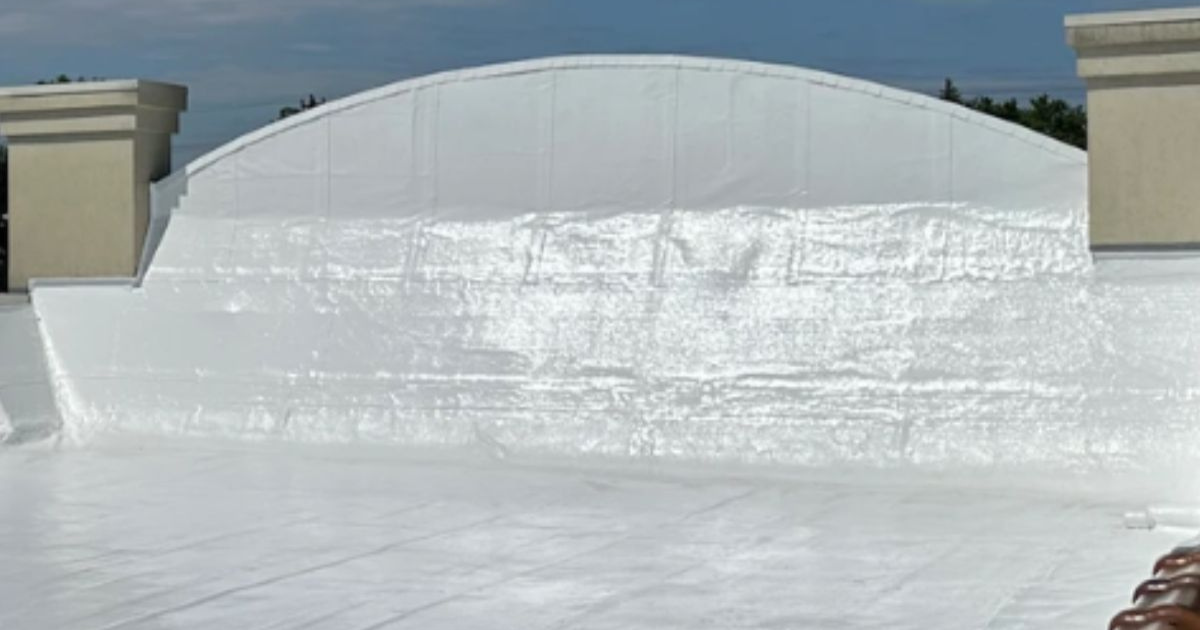
There’s a kind of exhaustion that sets in after the third or fourth roof repair that doesn’t hold. You call a contractor, pay the bill, and a few months later find a new water stain on the ceiling or a bucket quietly placed in the stockroom. At some point, a question starts to grow: Am I just throwing money at a roof that needs to be replaced entirely?
That’s exactly where the owner of an ethnic Indian grocery store in Farmington Hills, Michigan, found himself. In the end, his new silicone roof coating system cost approximately 50% less than a full tear-off and has held without issue since.
This is the story of that project, why it worked when everything else hadn’t, and what it means if you’re managing a commercial building with a similar history.
Wondering whether your roof is a candidate for coating or replacement? Contact Silicoat Roofing for an honest assessment with no commitment required.
The Building and the Problem: A Roof That Had Been Patched to Death
Modified bitumen is a reliable flat roofing material. Under the right conditions and with reasonable maintenance, it performs well for 20 years or more. The challenge is what happens when those conditions aren’t met and maintenance tips into chronic repair mode.
The core vulnerability of modified bitumen is UV exposure. Over time, the asphalt-based material oxidizes, becoming brittle and losing the flexibility that allows it to expand and contract with temperature swings – and in Michigan, those are significant. A roof that might see minus 10 degrees in January and 95 degrees on an August afternoon is under considerable thermal stress, and by the time a modified bitumen roof has been through 25 of those cycles, the membrane has typically aged in ways that aren’t always visible from a distance but are very apparent up close.
For the Farmington Hills grocery store, the repeated leaks weren’t random bad luck – they were the membrane telling anyone who looked carefully that it needed more than a patch.
The Petroleum Patch Problem
Previous contractors had approached this roof in the usual way for aging commercial flat roofs: one leak at a time, using petroleum-based patching products. It’s a familiar response, and not an unreasonable one in isolation.
The problem is that these products share a fundamental weakness with the modified bitumen they’re applied to: UV degradation. The same sun that had been breaking down the original membrane was also quietly degrading each new patch. And because those patches were applied in sequence by different contractors over the years, the roof surface had become a patchwork of materials in varying stages of breakdown, each with slightly different adhesion profiles and flexibility characteristics. Rather than a unified membrane, the roof was essentially a collection of overlapping problems.
This is why the leaks kept returning. Fixing one spot while the surrounding material continued to deteriorate is a process with no natural endpoint.
Grease, Contamination, and a Challenge Most Contractors Don’t Anticipate
Here’s the detail that made this project genuinely more complex than a standard commercial coating job: the building was an active grocery store with a functioning kitchen. Over 25 years, the roof surface had absorbed grease and commercial cooking contaminants from the exhaust system.
This matters because any coating applied over a contaminated substrate will fail to bond properly. The chemistry is straightforward: silicone needs a clean, prepared surface to adhere correctly, but grease acts as a release agent, so any coating applied over it may look fine initially but will delaminate over time.
Silicoat’s team saw a contaminated flat roof that needed a very specific cleaning protocol before a single drop of silicone was applied. That difference in assessment shaped the entire project.
The Assessment: Why This Roof Didn’t Need to Be Replaced
When a commercial building owner hears “25-year-old roof with a history of recurring leaks,” the automatic assumption is often that replacement is inevitable. It’s understandable. The leaks feel like symptoms of a roof that’s simply used up. But the condition of the deck structure and the membrane beneath the surface matters just as much as the age on paper.
Silicoat evaluated the Farmington Hills roof carefully before making any recommendation. The underlying deck was structurally sound. The modified bitumen membrane, while weathered and UV-damaged at the surface, had not deteriorated to the point of delamination or structural failure. The roof had life left in it, and a properly executed silicone roof coating system was exactly what it needed to perform again.
That finding changes the entire financial calculation. A full tear-off on a 5,000-square-foot commercial roof involves removing and disposing of the existing membrane, installing new material, and managing the disruption of a multi-day construction project on an active commercial building. A silicone coating roof restoration involves cleaning the existing surface thoroughly, applying a high-performance coating system, and delivering a finished roof that performs comparably to a replacement at a fraction of the cost. For property owners in this situation, a flat roof restoration system like this one is often the most practical path forward (provided the assessment confirms the deck can support it).
The 50% Cost Difference in Real Terms
On this project, the silicone roof coating system came in at approximately 50% of what a traditional tear-off and replacement would have cost. For a building owner managing a grocery store on a commercial property budget, that’s not a marginal difference. It’s the kind of savings that changes capital planning decisions.
It’s also worth being direct about what that 50% figure does and doesn’t mean. A coating is not a guaranteed fix regardless of conditions. If the deck had been compromised or if the membrane had been in worse shape, the honest answer might have been that replacement was necessary. The cost advantage of roof coating vs replacement only holds when the underlying structure supports it. That’s why a credible professional assessment matters before committing to either path.
The table below shows how the two options compare across the factors that mattered most for this specific project.
| Factor | Silicone Roof Coating System | Full Tear-Off & Replacement |
|---|---|---|
| Cost | ~50% of replacement cost | Full capital expenditure required |
| Project Duration | 2 days | 1 to 2 weeks or more |
| Business Disruption | None — store stayed fully open | Significant operational impact during construction |
| UV Resistance | Inherent — structural molecular stability, no additives required | Depends on new membrane type selected |
| Ponding Water Resistance | High | Moderate — varies by material |
| Warranty | Lifetime warranty (Silicoat Roofing) | Manufacturer warranty on materials only |
| Deck Condition Required | Sound deck required — assessed before coating | Full replacement proceeds regardless of deck |
| Prep Complexity | High — all contamination must be fully removed before application | Existing membrane torn off and disposed of entirely |
If you’re dealing with recurring leaks on your flat roof, contact us for an assessment – we’ll give you a straight answer about what your commercial building needs.
Roof Coating Application Process
Day One: Cleaning
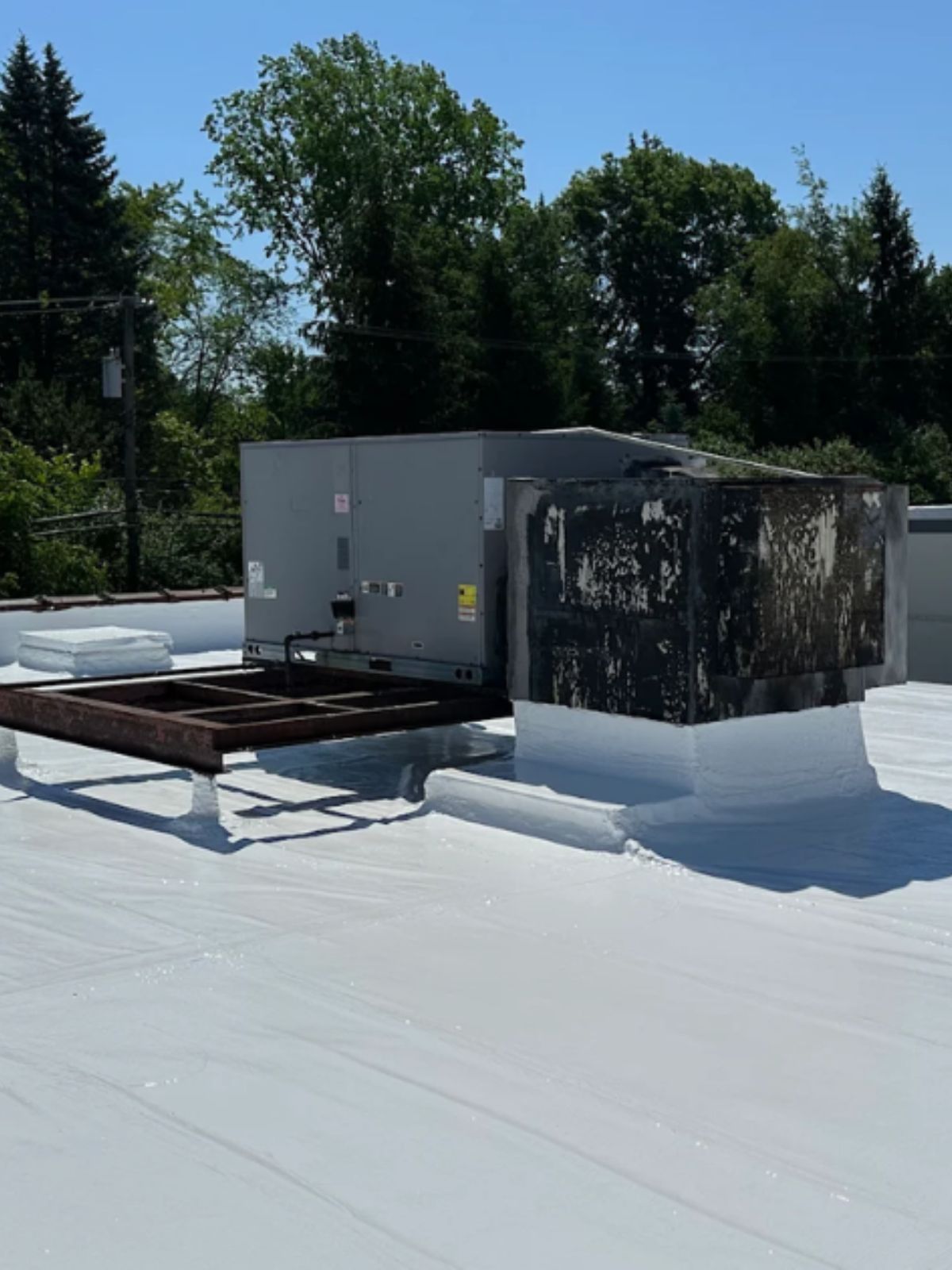
Silicoat’s crew arrived with a cleaning protocol built around the specific contamination profile of this roof. Standard pressure washing removes loose debris and general dirt, but it doesn’t cut through commercial kitchen grease that has been baked into a roofing membrane over the years of sun exposure. The cleaning process here had to go deeper, using a thorough approach designed to strip the surface down to the point where silicone could actually bond.
This phase is where a lot of roofing projects go wrong before they even start. Surface preparation is unglamorous work. It takes time. And Silicoat did not move on early. The roof surface was cleaned to a standard that would support proper adhesion, because the entire performance of the coating depended on that bond. No coating product in existence compensates for poor prep.
Day Two: The Roof Coating Application Process
With the surface prepared, the roof coating application process began. The application on a project like this involves close attention to thickness, coverage rate, and particular care around seams, penetrations, and low points, the areas where water tends to collect and where leaks most commonly originate.
Coating thickness matters more than most property owners realize. Applied too thin, the coating won’t deliver adequate UV protection or long-term waterproofing performance. Applied unevenly, vulnerable spots develop that water will eventually find. Silicoat has been applying silicone coatings since 2019, working on projects ranging from 1,000 square feet to 400,000 square feet. That breadth of experience means the team knows what correct application looks like in practice, not just in theory.
The Operational Advantage Nobody Talks About
Throughout both days of this project, the grocery store stayed open. Customers came in, made their purchases, and left without any indication that a roofing project was underway above them. No inventory disruption. No refrigeration concerns from an exposed roof structure. No signage about construction access. For a commercial property owner, that operational continuity has real financial value that doesn’t appear in most contractor comparisons but absolutely should.
The Result: Kevin Wartersian’s Testimony
Kevin Wartersian left Silicoat Roofing a five-star review that captures something important about how this project came to happen at all:
“Silicon coating is a one-time problem solver if applied correctly, without cutting corners. For these reasons, I hired Silicoat Roofing. I had seen Rick’s work on a few other buildings a few years back and had no issues, which is why I chose Rick. Good work and very professional, I recommend it to all property owners.”
In commercial roofing, that’s the real track record. Not what a contractor says about their work, but whether the buildings they coated years ago are still dry.
“We’ve been doing this since 2019, and the one thing that never changes is this: the prep work determines the result. The silicone we use is excellent, but it doesn’t matter how good the product is if the surface isn’t ready for it. We don’t cut corners on prep, and that’s why our roofs hold.” – Rick Dodaj, Founder of Silicoat Roofing.
Silicoat’s Track Record Across Michigan
Silicoat has coated several hundred commercial buildings across Michigan, ranging from small retail units under 2,000 square feet to large industrial and commercial facilities at 400,000 square feet.
In addition, Silicoat backs its work with a 20-year warranty on silicone coating systems. That warranty is meaningful specifically because the application is done correctly. A warranty on a poorly prepped, underthin coating job is worth very little in practice. The warranty reflects confidence in the process, not just the product.
Silicone Roof Coating Benefits
The Farmington Hills project is representative of a situation Silicoat encounters regularly across commercial properties in Michigan. An aging flat roof, a history of patch repairs that never quite solved the problem, an owner who has grown skeptical about what’s actually possible, and a decision point between continuing to patch, committing to a coating restoration, or proceeding with full roof replacement. Every commercial roof coating case study tells a slightly different version of that story, and the outcome usually comes down to one variable: whether the prep was done right.
Sometimes replacement really is the right call. But it’s worth finding out through a genuine professional assessment before assuming the worst.
Silicone Roof Coating Benefits Beyond Stopping the Leaks
The immediate appeal of a silicone coating system is straightforward: the leaks stop. But the silicone roof coating benefits that compound over time are worth understanding for any commercial property owner making a long-term planning decision, because this is really a long-term roof leak prevention investment rather than a one-time fix.
Silicone’s reflective surface reduces heat absorption through the roof membrane. For a grocery store where refrigeration runs constantly, even a modest reduction in ambient heat load has operating cost implications over a full summer. The UV resistance of the silicone extends the functional lifespan of the underlying membrane, pushing back the eventual need for replacement.
Questions Worth Asking Before Hiring Any Roof Coating Contractor
Before signing with a commercial roof coating contractor, it’s reasonable to ask a few direct questions. How long have they been applying silicone specifically, not just coatings in general? How do they handle surface contamination on active commercial properties? What does their cleaning protocol involve, and how long does it take? Can they provide references from comparable projects with similar age, substrate, and building type? And what does their warranty cover, specifically, and for how long?
The answers to those questions reveal more about a contractor’s actual approach than any marketing material will.
Frequently Asked Questions
A properly applied silicone roof coating system typically lasts 20 years or more when maintained correctly. Application quality is the determining variable. Silicone applied over a contaminated or poorly prepped surface will fail prematurely regardless of the product’s rated performance.
It depends on the condition of the underlying deck and membrane, not the age alone. If the structural deck is sound and the membrane has not deteriorated beyond the point of adequate adhesion, a silicone system can extend the roof’s functional life significantly. In this Farmington Hills case, a 25-year-old modified bitumen roof was fully restored at 50% of the replacement cost.
Silicone’s molecular structure does not break down under UV exposure. Petroleum-based products share the same core vulnerability as the modified bitumen they’re applied to, which is why petroleum patches on UV-degraded roofs tend to fail within a few years. Silicone addresses the UV problem at the material level rather than layering another UV-vulnerable product on top.
In most cases, yes. The Farmington Hills grocery store in this case study remained fully operational throughout both days of the project. Because silicone coating is a restoration process rather than a tear-off, disruption to the building interior is minimal. Specific conditions, including roof access points, ventilation, and business operations, should be reviewed with the contractor during the assessment.
On this specific project, the silicone coating system came in at approximately 50% of what a traditional tear-off and replacement would have cost. That figure varies by project based on roof size, condition, prep requirements, and local material costs. In general, coating restoration is substantially less expensive than replacement when the underlying structure is sound, which is why a professional assessment before committing to either option is worth the time.
It means the surface was thoroughly cleaned and prepared before any product was applied, the coating was applied at the correct thickness and coverage rate, seams and penetrations and low points were treated carefully, and the work was completed under appropriate weather conditions. These factors collectively determine whether the coating bonds correctly and performs long-term. A coating that looks complete but was applied thin or over a contaminated surface will fail, often within a few years.
A professional roof assessment is the most reliable way to answer that. Generally, a flat commercial roof is a good candidate if the underlying deck structure is sound, the membrane has not delaminated or failed structurally, and the surface can be adequately cleaned for proper coating adhesion. Silicoat provides professional assessments for commercial properties across Michigan.
The Bottom Line on Silicone Roof Coating Systems
The Farmington Hills grocery store project isn’t a complicated story. A properly installed silicone roof coating system addressed what those patch repairs never did over 25 years: the UV degradation baked into the membrane, the grease contamination of commercial kitchen exhaust, and the absence of a unified, bonded protective layer across the entire surface.
Two days of work, zero disruption to the business, and 50% of the cost of a full tear-off.
What Kevin Wartersian described in his review is the same thing Silicoat hears from clients across Michigan regularly: “a one-time problem solver if applied correctly, without cutting corners.” That’s the whole case for this approach in one sentence. The silicone works. The prep is what determines whether the silicone actually performs.
If you’re managing a commercial building in Michigan with a flat roof and a history of recurring leaks, Silicoat offers professional assessments with no commitment attached. The goal is a straight answer about what your roof actually needs, whether that’s a coating system, a more targeted repair, or a replacement.
Ready to find out what your roof actually needs? Contact Silicoat Roofing to schedule your assessment.
About the Author
Rick Dodaj is the founder and CEO of Silicoat Roofing, specializing in commercial roofing solutions that protect businesses and their investments. With extensive experience in commercial roofing, Rick leads a team dedicated to providing cost-effective, long-lasting roofing solutions.
 Previous Post
 Next Post