
Your Roof Warranty Is Only Valid If You Do This
Most building owners sign a commercial roof warranty and file it somewhere safe. They assume the coverage works the way insurance does: something fails, you call, it gets fixed.
That is not how it works.
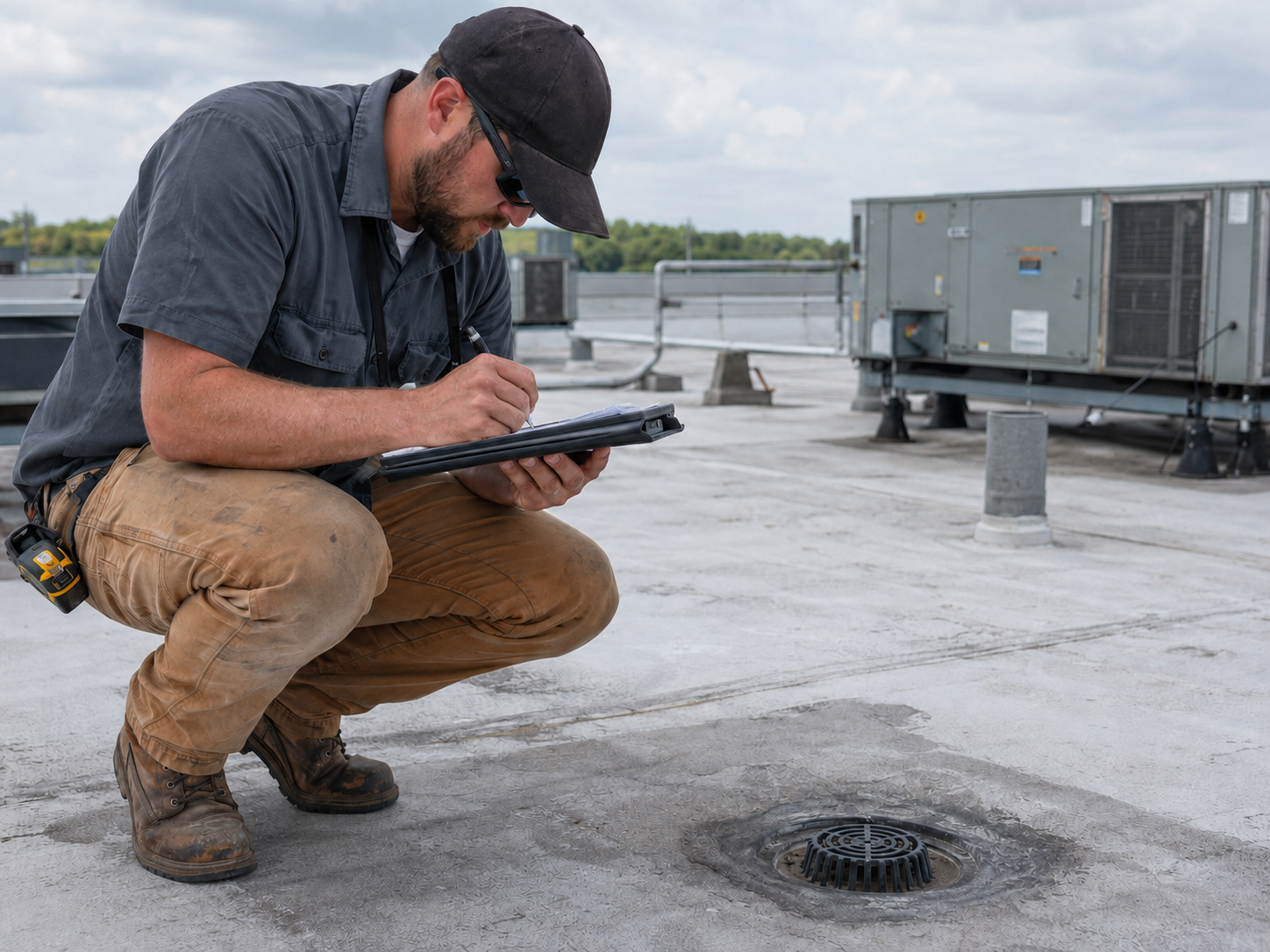
Roof warranty inspection requirements are written into the fine print of nearly every commercial roofing warranty, and manufacturers enforce them when claims come in. Missing a required inspection, using the wrong contractor, or failing to keep the right documentation on file gives the warranty provider grounds to deny a claim, regardless of whether the failure was their fault. A warranty without a documented inspection history is not much more than a piece of paper.
This post explains exactly what the roof warranty inspection requirements are, what needs to be in your records, and what Silicoat Roofing’s team does to keep commercial buildings across the Detroit metro covered when a claim actually matters.
If you want to get your inspection documentation current before an issue arises, Silicoat Roofing offers a free roof analysis for commercial buildings across the Detroit metro region.
Why Manufacturers Enforce Inspection Requirements So Strictly
A commercial roof warranty is not a service contract. A manufacturer guarantees that their materials and the installation will perform as specified, provided the owner maintains the system according to a defined standard.
That standard exists because neglect and warranty-covered defects look identical from the inside of a building. Water coming through a membrane could mean the material failed prematurely. It could also mean a drain was blocked for two years, ponding water broke down the membrane over time, and nobody caught it. The inspection record is what separates one scenario from the other.
Manufacturers use that record to determine whether a failure is their liability or the owner’s. When the record is missing, incomplete, or performed by an uncertified contractor, they have standing to decline the claim. The National Roofing Contractors Association confirms that manufacturer warranties routinely include owner maintenance responsibilities as a condition of coverage. Skipping even one required inspection can give a manufacturer a documented reason to deny.
This is not a technicality most building owners plan for. It is the most common reason legitimate warranty claims get rejected.
What Most Commercial Warranties Actually Require
Requirements vary by manufacturer and warranty tier, but the following conditions appear consistently across commercial roofing warranties.
Inspections by a certified professional, at minimum twice a year. Most manufacturer warranties specify spring and fall inspections performed by a certified roofing contractor, not building staff. Some premium warranty tiers require that the inspection be completed by a contractor certified specifically by the manufacturer. Using a general contractor or an uncertified roofer for the inspection, even a qualified one, can void certain warranty types.
Written documentation after every inspection. An oral report from a contractor is not sufficient. The warranty requires a written record, and most manufacturers specify what that record must contain. An inspection that was completed but not documented is treated the same as an inspection that never happened.
Prompt repair of identified deficiencies. Finding a problem is not enough. Most warranties require that deficiencies identified in an inspection report be addressed within a defined window. Allowing a documented issue to sit unrepaired through the following season is considered neglect, and neglect voids coverage.
Manufacturer-approved contractors for all repairs. Repairs performed by uncertified contractors, or using materials not approved for the specific warranty type, can void coverage entirely. This applies to any trade that touches the roof: HVAC installers, solar contractors, satellite technicians. If a penetration is created without manufacturer-approved methods, the warranty is at risk regardless of who created it.
Pre-approval for roof modifications. Adding equipment, new penetrations, or any structural change to the roof surface typically requires written pre-approval from the manufacturer. Unauthorized modifications are among the most common causes of warranty voidance, and they are avoidable.
Transfer notification if the property sells. Most manufacturer warranties are transferable, but the transfer must be formally registered within a defined window, often 30 to 60 days after closing. Missing that window can permanently void coverage, which directly affects the property’s value in a transaction.
What the Inspection Record Needs to Include to Hold Up at Claim Time
This is the section most warranty compliance guides skip over, and it is the one that determines whether your documentation actually protects you.
A manufacturer reviewing a claim pulls the inspection record first. What they are looking for is proof that the roof was evaluated on schedule, that findings were documented specifically enough to show real attention, and that any identified issues were followed up on. A one-page summary that says “roof in good condition” after a 20-minute walk does not meet that standard.
A compliant inspection record includes:
- The date of the inspection and the name and certification status of the contractor who performed it
- A roof diagram or plan with deficiency locations marked and referenced
- Photographs of every finding, with timestamps, tied to specific locations on the roof
- A condition assessment for each major component: membrane, seams, flashings, penetrations, drainage, perimeter
- A prioritized deficiency list that distinguishes items requiring immediate action from items to monitor
- Documentation of any repairs completed since the previous inspection, with contractor name, date, and materials used
- A confirmation that drainage is clear and that no ponding water conditions were observed or left unaddressed
That record does not need to look like an engineering report, but it needs to be specific enough that someone who was not on the roof can read it and understand exactly what condition the roof was in on that date.
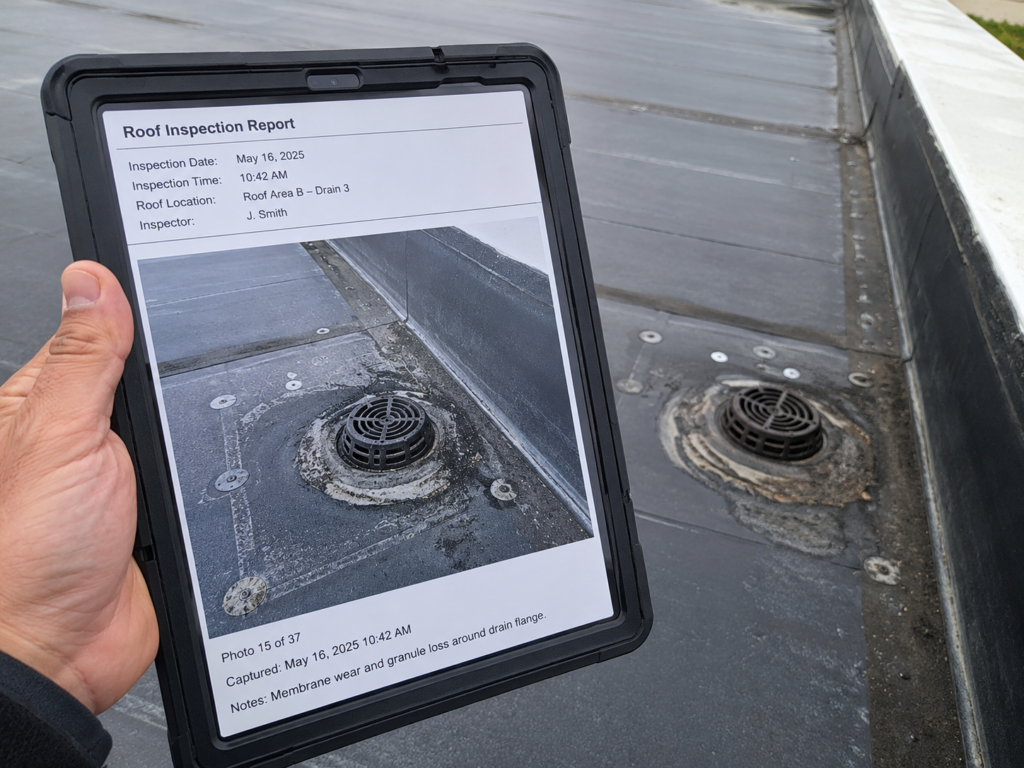
Silicoat Roofing’s inspection process produces a written report with timestamped photographs and a location-referenced findings list after every visit, which is the format that holds up when a claim goes to review.
Learn what a complete commercial roof inspection covers
The Situations That Most Commonly Void Warranty Coverage
Understanding the requirements is one thing. Knowing where buildings actually lose coverage is more useful.
Gaps in the inspection schedule. A single missed inspection creates a gap in the documentation trail. Manufacturers are not required to assume the roof was fine during that period. If a failure is traced to conditions that developed while inspections were lapsed, the claim can be denied on that basis alone.
Repairs made by uncertified contractors after a storm. This is common. A storm causes visible damage, a facility manager calls whoever is available, the contractor patches it with whatever material they have on the truck, and no one thinks about the warranty. The manufacturer receives a claim later, finds the unauthorized repair in the record, and declines coverage for the surrounding area because the repair compromised the system’s integrity.
Rooftop equipment installed without pre-approval. HVAC replacements, solar installations, and antenna mounts all require penetrations. Each one must be sealed and flashed to manufacturer specifications. If it was not, that penetration is a documented warranty violation every time the roof is inspected afterward.
Ponding water left unaddressed. Most warranties specifically exclude damage caused by sustained ponding. If an inspection report notes a drainage issue and no follow-up repair is documented, the manufacturer has grounds to attribute any future membrane failure to that neglected condition.
How a Documented Inspection Program Protects More Than the Warranty
The inspection record does a second job that building owners rarely think about until they need it.
Insurance carriers are increasingly requiring documented inspection histories before paying commercial storm damage claims. A carrier that sees no maintenance record has grounds to classify damage as pre-existing or resulting from neglect, which reduces or eliminates the payout. The same documentation that keeps your warranty valid protects your insurance position after a hail event or major storm.
For buildings in Michigan, where freeze-thaw cycles and heavy snow loads test flat roof systems hard every winter, having a documented spring inspection becomes especially important. It establishes what condition the roof was in before winter, which is the baseline any post-storm claim comparison requires.
Frequently Asked Questions
How often does a commercial roof need to be inspected to keep the warranty valid?
Most commercial manufacturer warranties require a minimum of two inspections per year, in spring and fall, performed by a certified contractor. Some premium warranty tiers require the inspection be completed by a manufacturer-certified contractor specifically. Check your warranty documentation for the exact interval and contractor qualification requirement.
What voids a commercial roof warranty?
The most common causes are missed inspections, unauthorized repairs by uncertified contractors, rooftop modifications made without manufacturer pre-approval, and failure to follow up on deficiencies documented in an inspection report. Sustained ponding water left unaddressed is also a documented exclusion in most warranties. Missing documentation is just as problematic as missing maintenance.
Does the inspection need to be done by a specific type of contractor?
It depends on the warranty tier. Basic warranties typically require inspection by a licensed roofing contractor. Extended or full-system warranties often require inspection by a contractor certified by the specific manufacturer. Using a general contractor or building staff for required inspections may not satisfy the warranty terms even if the work is competent.
What happens if I miss an inspection?
Missing a required inspection creates a gap in your documentation record. Manufacturers are not obligated to assume the roof was maintained during an undocumented period. If a failure is later traced to conditions that developed during a lapsed inspection window, the claim can be denied on that basis. One gap does not automatically void the warranty, but it significantly weakens your position if a claim is filed.
Can my warranty be transferred if I sell the building?
Most manufacturer warranties are transferable, but the transfer must be formally registered with the manufacturer within a specified window, typically 30 to 60 days after closing. Documentation of the inspection and maintenance history transfers with the warranty. Missing the registration window can permanently void coverage, which affects the asset’s value. Confirm transfer requirements with your contractor before listing the property.
What Your Inspection Program Should Look Like Going Forward
A commercial roof warranty is only as strong as the maintenance record behind it. Two documented inspections per year, performed by a certified contractor, with written reports that include timestamped photographs and a location-referenced findings list: that is the standard that holds up when a claim is reviewed.
Silicoat Roofing is a commercial roof coating company in Troy, Michigan, serving the Detroit metro region with 20+ years of expertise in roof inspection, restoration, repair, and maintenance. Every inspection Silicoat completes produces the written documentation that satisfies roof warranty inspection requirements and protects building owners when it matters. For roofs that qualify for restoration, the work comes backed by Silicoat’s 20 Year Leak-Free Guarantee.
Ready to find out what your roof is actually costing you? Silicoat Roofing offers a free roof analysis for commercial buildings across the Detroit metro region: https://silicoatroofing.com/contact/
About the Author
Rick Dodaj is the founder and CEO of Silicoat Roofing, specializing in commercial roofing solutions that protect businesses and their investments. With extensive experience in commercial roofing, Rick leads a team dedicated to providing cost-effective, long-lasting roofing solutions.
 Previous Post
 Next Post