


A commercial roof can look fine from the parking lot and still be quietly failing.
That’s one of the hardest parts of managing a building: the problems that cause major disruption usually start small, in places you cannot see from the ground. A seam that was not sealed consistently. Flashing that was installed quickly instead of correctly. A drain detail that works “most of the time” until you hit one heavy storm. Early roof problems tend to come with one uncomfortable question:
If this roof is new, why are we dealing with this already?
When that happens, many owners assume they are stuck with a long fight, but this guide is here to make the situation clearer. Let’s walk through the most common causes of commercial roof installation failure, the early warning signs that point to improper installation, and what you can do next to protect your roof system before defects turn into expensive downtime.
What Commercial Roof Installation Failure Really Means
When people talk about this topic, they often mean a roof that “wore out.” That is normal aging. Every roof system has a lifespan, and eventually it needs restoration or replacement.
Commercial roof installation failure is different.
It happens when the system was installed in a way that leaves it vulnerable from the beginning. In some cases, the real damage develops silently until it shows up as a leak, interior staining, or a trapped moisture problem.
How early failure usually shows up in commercial buildings
In commercial roofing, the earliest symptoms tend to appear in areas that carry stress or movement. These are the “pressure points” of a roof system:
- Penetrations around HVAC units and vents
- Parapet walls and termination edges
- Drains and scuppers
- Seams and transitions
- Roof corners that take wind load
If the installation quality is solid, these details are built to hold up. But if the details were rushed or inconsistent, these are typically the first places where issues appear.
Why installation defects can stay hidden at first
One of the reasons roofing installation defects are so frustrating is that they are not always dramatic – sometimes it starts as a small inconvenience.
A roof can be defective and still pass a basic walkthrough, looking “clean” from the surface during a dry season. Bu when the weather shifts, the weaknesses finally show themselves.
Then it becomes a repeat problem.
Once you understand what commercial roof installation failure means, the next step is identifying what causes it. Most of the time, the failure is not one single mistake. It is a combination of shortcuts that add up.
The Most Common Causes of Improper Commercial Roof Installation
In commercial roofing, details are not “extras” – they are the system.
Here are some of the most common root causes of improper commercial roof installation and how they lead to early failure.
Poor workmanship and rushed decisions
Poor workmanship does not always mean the crew did not care. Sometimes, it means the job was built around speed instead of precision.
A rushed roof installation often creates:
- Inconsistent adhesion or fastening patterns
- Loose edges at terminations
- Unsealed or partially sealed seams
- Poor transitions around penetrations
- Flashing work that is “close enough”
The problem is that roofing systems do not forgive inconsistency. Water will find the weak point (usually at the worst possible time.)
If your roof leak starts early, especially near edges or penetrations, poor workmanship could be on the shortlist of likely causes.
Membrane installation errors that create weak points
These roofs can perform extremely well when installed correctly. Common membrane installation errors include:
- Seams not fully welded or sealed
- Overlaps that are too small or uneven
- Wrinkles or fishmouths that create channels for water
- Contamination at seam areas that prevents proper bonding
- Heat inconsistencies during welding that weaken material
These issues can be easy to miss during installation, especially if quality control is not thorough. In a busy commercial environment, membrane errors are especially risky because they can lead to recurring leaks that seem “random” until someone maps the pattern.
Flashing failures at the roof’s most vulnerable zones
If you ask experienced roof professionals where most leaks come from, many will tell you the same thing.
Not the middle of the roof, but the edges and penetrations.
A roof can have excellent membrane coverage but still fail if flashing details were installed with gaps, weak seals, or incorrect termination. These problems often show up as:
- Water intrusion around HVAC curbs
- Leaks near parapet walls
- Separation at wall transitions
- Deterioration around pipe boots
- Staining that appears near the roof perimeter
When flashing fails early, it is rarely because the roof is “old.” It is typically because the details were not built to hold up long-term.
Drainage issues created during installation
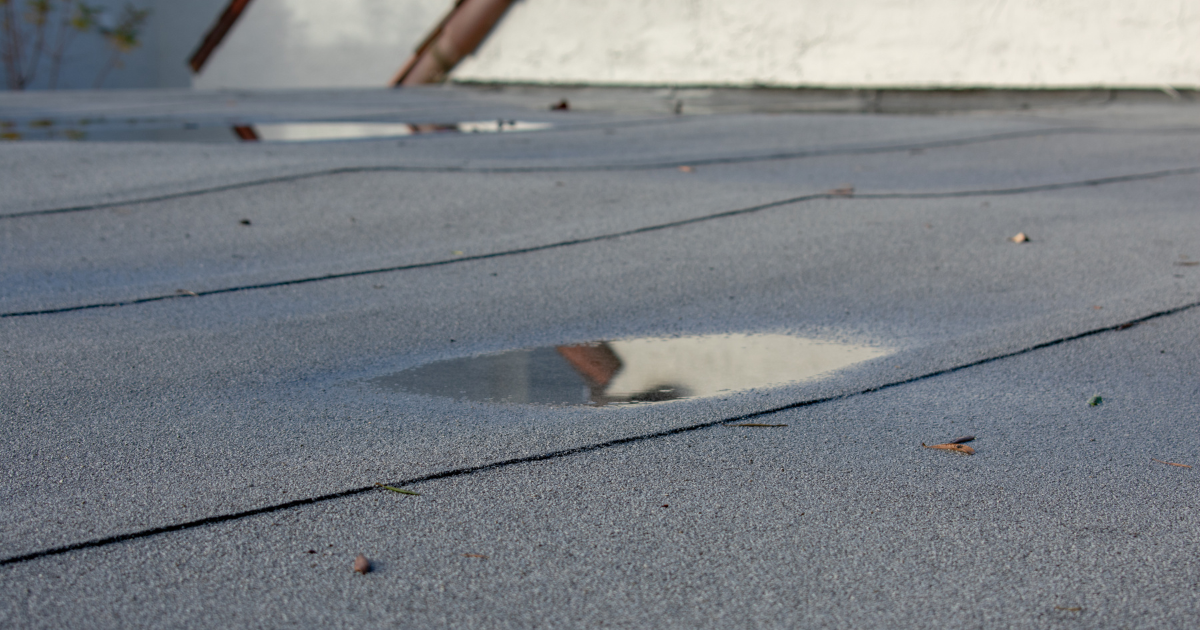
This is one of the most underestimated installation issues in commercial roofing, because if water does not drain, it sits. And when water sits, it creates constant pressure on seams, transitions, and tiny defects that would otherwise stay harmless.
Drainage-related installation defects can include:
- Incorrect slope design
- Drains set too high
- Low spots created by uneven insulation placement
- Scuppers that cannot keep up with storm volume
- Ponding areas that were never corrected during install
Ponding water is not always “instant failure,” but it accelerates everything. It stresses the roof system, increases the chance of seam intrusion, and can contribute to premature breakdown.
Now that we have covered the root causes, the next step is learning how to recognize them early. That is where owners and facility managers can save a lot of money and avoid disruption.
Warning Signs of Early Commercial Roof Failure
Some warning signs are obvious, but others can be easy to dismiss at first.
The goal here is not to turn you into a roofing contractor, but to help you spot patterns that strongly suggest early commercial roof failure linked to installation defects.
Repeating leaks that keep returning
One leak can happen for many reasons. But if it keeps coming back, especially after “repairs,” that is a major red flag.
Repeating leaks often point to:
- unresolved membrane installation errors
- flashing failures that were patched instead of corrected
- poor workmanship around penetrations
- water moving through saturated insulation and showing up elsewhere
One of the most frustrating parts is that the leak location inside the building may not match the roof entry point, because water travels. That is why a recurring interior leak should be treated as a system issue, not just a spot fix.
Bubbling, blistering, and seam separation
If you walk a roof and notice bubbles or blisters, that can indicate trapped moisture, improper adhesion, or installation inconsistencies.
Seam separation can show up as:
- edges lifting
- tape pulling back
- visible gaps at overlaps
- wrinkles that create open pathways
These are not cosmetic issues. They are warning signs that water intrusion may already be happening. In some cases, seam issues appear most clearly after temperature swings. A roof expands and contracts. Weak seams show movement first.
Interior staining that grows in strange ways
Water stains are often the first visible sign building occupants notice. But staining patterns can reveal a lot.
Signs that point to installation-related defects include:
- stains appearing near walls or edges
- staining around penetrations even after “repairs”
- multiple stains forming after one storm
- stains that grow gradually over weeks
If stains keep growing, even during dry periods, trapped moisture inside the roof assembly may be contributing.
Once you spot these warning signs, the next step is getting clear documentation. That is where roof inspection reports become extremely valuable, especially when multiple parties are involved.
Why Third Party Roof Inspection Reports Protect Your Budget
If you suspect roofing installation defects, you might be tempted to rely on opinions, but those do not protect buildings. Documentation does.
That is why professional reports matter. They turn vague concerns into clear findings that can guide decisions.
Why relying on “quick fixes” leads to repeat failures
Many commercial roof issues get treated like a drip under a sink: patch it and move on.
But roof problems do not behave like plumbing problems. A patch can stop visible leaking without addressing moisture below the surface, flashing failure roots, or seam integrity across a section.
That is why many owners get stuck in the cycle:
Leak → Patch → Leak again → Patch again → Bigger leak later
An inspection breaks that cycle by identifying the true cause.
What a credible roof inspection process should include
Every roof is different, but strong roof damage inspections usually include:
- evaluation of seams, edges, and terminations
- inspection of flashing details and penetrations
- drainage assessment
- documentation of visible defects
- photos of the problem areas
- recommendations prioritized by risk
In some situations, deeper evaluation may be recommended depending on the symptoms, but the key is: a good inspection gives you clarity, not confusion.
The value of inspection reports when warranty issues appear
Commercial roof warranty conversations can become frustrating fast. Owners often hear phrases like:
- “That’s maintenance.”
- “That’s wear and tear.”
- “That’s not covered.”
Third party roof inspection reports help create a factual foundation. They give you something concrete to reference when the next steps involve:
- contractor accountability
- manufacturer warranty discussions
- budgeting for corrective work
- risk mitigation planning
Even if the outcome is repair and maintenance instead of replacement, the report helps you avoid guessing.
How Silicoat Roofing supports building owners through this stage
We work with commercial building owners and facility managers who need honest answers and practical next steps. Support may include:
- identifying installation-related defects that create leaks or early deterioration
- explaining issues in plain language so you can make decisions confidently
- documenting defect patterns so repeat problems stop repeating
- recommending repair and protection options that fit your building’s priorities
This is especially helpful when you need to justify decisions internally, as facility management is often asked to “prove” why something needs attention. A professional evaluation helps you communicate the problem clearly.
“We see a lot of roofs that fail early because of small installation details that were skipped or rushed. Our job is to find the real weak points and help owners prevent repeat damage, not just patch symptoms.” – Rick Dodaj, Founder of Silicoat Roofing.
FAQ Commercial Roof Installation Failure
What is commercial roof installation failure?
Commercial roof installation failure is when a roof system fails early due to installation mistakes instead of normal aging. It often involves seam, flashing, or drainage defects.
What are the most common roofing installation defects?
Common roofing installation defects include membrane installation errors, flashing failures, inconsistent seam sealing, incorrect drainage slope, and poor workmanship around penetrations.
How do I know if my roof leak is caused by improper installation?
If leaks repeat in the same areas, occur near penetrations or edges, or appear soon after installation, improper commercial roof installation is a likely cause. Inspection and documentation are the best way to confirm.
Can poor workmanship cause early commercial roof failure?
Yes. Poor workmanship can create weak seams, incorrect flashing details, and unstable terminations that allow water intrusion, especially during wind-driven rain.
Are third party roof inspection reports worth it?
Third party roof inspection reports provide documentation and clarity. They help owners confirm defects, plan repairs intelligently, and support warranty or contractor conversations.
What should I do if my roof is failing early?
Start with an inspection, document defects, then follow a corrective plan that addresses the root causes instead of repeated patching.

A fair reality check for building owners
It is important to be honest here.
Even with strong repairs, a roof that was installed poorly across the entire system can remain vulnerable. Some defects are localized and fixable, but others acan bere widespread.
The good news is that you do not have to guess which category your roof falls into. A professional inspection can tell you.
If you are seeing early leaks, seam issues, or ongoing interior staining, contact us to schedule an inspection and get a clear plan before costs climb.
About the Author
Rick Dodaj is the founder and CEO of Silicoat Roofing, specializing in commercial roofing solutions that protect businesses and their investments. With extensive experience in commercial roofing, Rick leads a team dedicated to providing cost-effective, long-lasting roofing solutions. Connect with him on LinkedIn to learn more about commercial roof maintenance and protection strategies.
 Previous Post
 Next Post