

Roof Coating vs Replacement: How Commercial Building Owners Make the Right Call
Most facility managers don’t start researching roof coating vs replacement because things are going well. Something pushed them there. Roofing contractors tend to recommend what they sell, and generic articles split the difference and tell you to consult a professional. Neither gives you the framework to evaluate the decision yourself before anyone shows up with a proposal.
This article does. It covers what separates a roof that can be restored from one that genuinely needs replacement, how the cost math actually works over time, and what Silicoat Roofing’s team observes in the field that most building owners don’t hear from other contractors. By the end, you’ll have enough to ask the right questions and recognize a credible answer when you hear one.
Why the Roof Coating vs Replacement Decision Is Harder Than It Should Be
Commercial roofing decisions sit at an uncomfortable intersection of capital planning, operational risk, and contractor relationships. The person making the call is usually a facility manager or a property owner who knows buildings well but isn’t a roofing specialist. That gap gets exploited more often than it should.
The core problem is that the two options (coating and replacement) have very different financial profiles, and the contractor evaluating your roof often has a financial stake in which direction you go. A company that specializes in tear-offs and new installs has little incentive to recommend a roof restoration, while a coatings specialist may not always acknowledge when replacement is the more appropriate answer. Getting an honest assessment requires understanding the decision framework yourself.
There’s also a timing dimension that most articles skip entirely. A roof that’s borderline today (showing wear but still structurally intact) may be a strong candidate for restoration right now and a replacement candidate in three years if nothing is done. Deferred decisions rarely move in the cheaper direction. What Silicoat’s team consistently finds is that building owners who wait six to twelve months after the warning signs appear end up with less membrane integrity to work with, which can push a restorable roof into replacement territory. The window for the more affordable option closes quietly.
The decision also carries an asymmetry that favors action. A well-applied roof coating can extend a roof’s life by 15 to 20 years and costs, in Silicoat’s experience, roughly half the price of a full replacement on the same building. That spread is large enough that even a modest probability of restoration success changes the expected-value math significantly in favor of trying it first, provided the underlying roof structure is sound.
What Roof Coating and Replacement Each Actually Involve
Roof coating vs replacement isn’t just a cost comparison – it’s a comparison of two fundamentally different interventions. Understanding the mechanism behind each one makes the decision criteria much clearer.
A roof coating is a liquid-applied silicone or elastomeric membrane installed over an existing roof system to restore waterproofing, reflectivity, and weather impact resistance without removal. A full roof replacement tears off the existing system down to the deck and installs new materials. Coating costs roughly half the price of replacement and avoids landfill waste, but requires a structurally sound existing membrane.
How Roof Coatings Work
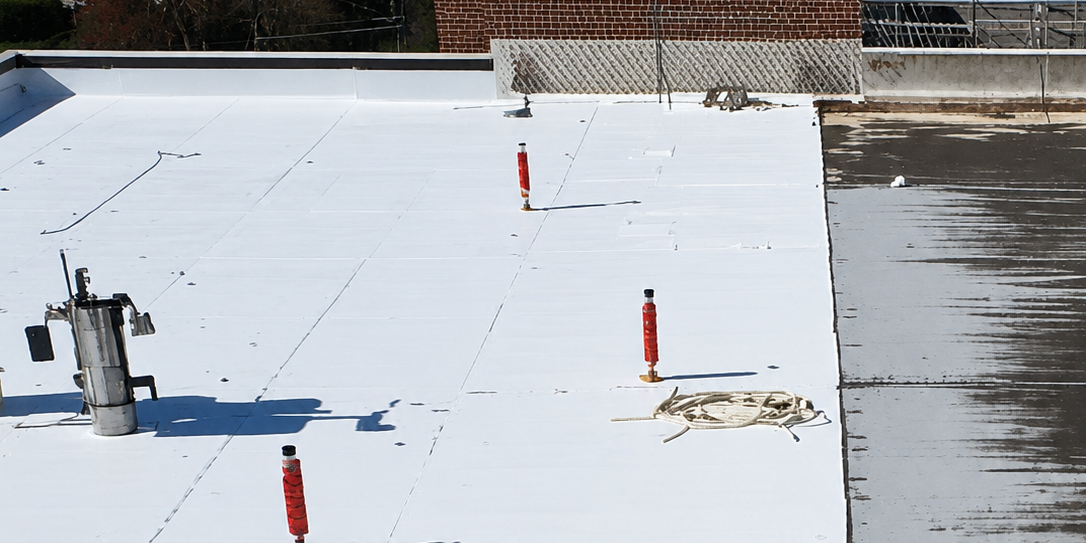
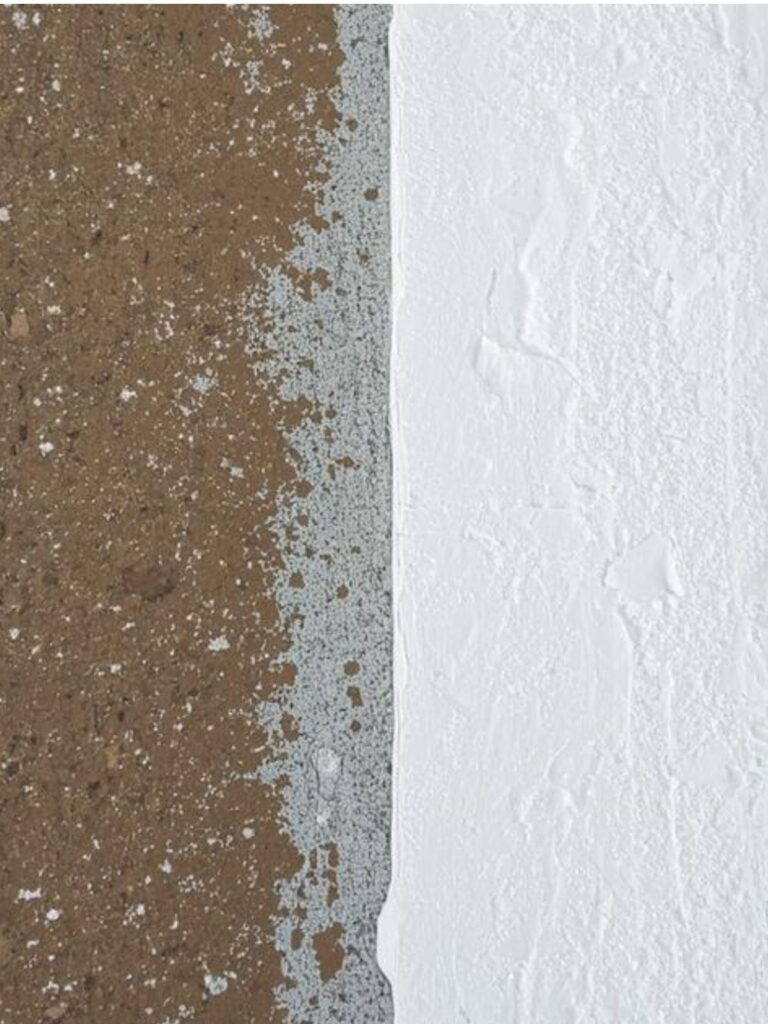
A silicone roof coating, which is the system Silicoat Roofing uses, is applied as a liquid directly over the existing roof membrane. As it cures, it forms a seamless, fully adhered waterproof layer that covers seams, flashings, and penetrations – the areas where leaks typically originate. The result functions like a new roof surface without any tear-off.
The silicone membrane also reflects UV radiation rather than absorbing it, which is what gives restored roofs their characteristic white appearance and what qualifies them as “cool roofs” under ENERGY STAR and industry standards. Reducing solar heat absorption lowers surface temperatures substantially (in some cases by 50°F compared to a dark, uncoated roof), which in turn reduces the cooling load on the building’s HVAC system. For a commercial building with a large flat roof, that thermal reduction translates directly into lower utility bills.
How Full Replacement Works
Replacement involves removing the existing roof system entirely (membrane, insulation, and sometimes substrate materials) and installing a new system from the deck up. It’s the right call when the existing roof has structural damage, widespread wet insulation, deck deterioration, or membrane failure so extensive that a coating would be applied over a compromised base.
The process is more disruptive than restoration. It takes longer, creates significant material waste, and costs considerably more. It also resets the warranty clock on the new system, which is its genuine advantage in cases where the existing roof has reached the end of its useful life in the most literal sense.
The distinction matters because “end of life” is a phrase contractors use loosely. A roof that has aged past its original warranty period is not automatically a replacement candidate. Age alone doesn’t determine whether a roof can be restored – condition does.
The Condition Factors That Drive the Decision
This is the section most building owners need and rarely get clearly explained. The roof coating vs replacement decision comes down to a specific set of physical conditions, not a contractor’s general sense of how old the roof looks.
Wet Insulation
Water that penetrates the membrane and saturates the insulation beneath it is the most important factor in the decision. Wet insulation cannot be coated over. It holds moisture that continues to degrade the system from below, and a coating applied on top of it will eventually fail regardless of product quality. When infrared scans or core samples reveal widespread wet insulation, roof replacement becomes necessary, at least for those sections.
Membrane Integrity
The existing membrane needs to retain enough structural integrity to serve as a sound substrate for the coating. Isolated splits, seam failures, and localized blistering can be repaired as part of the preparation process before the coating is applied – in fact, addressing those details is standard practice. What disqualifies a roof is membrane deterioration so widespread that repairs would amount to more work than replacement.
Deck Condition
If the structural deck beneath the roofing system has deteriorated from long-term water intrusion, rot in wood decks, or corrosion in metal decks, no surface-applied solution will address the underlying problem. Deck damage requires replacement at the affected sections, at a minimum.
Ponding Water
Flat and low-slope commercial roofs often have areas where water accumulates after rain and drains slowly. Silicone coatings are formulated specifically to resist ponding water, so if a building’s drainage issues are primarily at the surface level, a coating can be designed to accommodate them. But if ponding results from underlying slope or structural issues, those need to be addressed separately.
The Real-World Cost Math Between Coating and Replacement
The financial case for restoration over replacement is well-established in commercial roofing, and the gap is larger than most building owners expect.
Full commercial replacement for a flat roof typically runs between $10 and $20 per square foot, depending on the system specified, regional labor rates, and existing conditions requiring remediation. For a 20,000-square-foot commercial building, that’s a capital outlay of $200,000 to $400,000. Silicoat Roofing’s restoration approach, using the existing roof as the base and applying a liquid silicone membrane, delivers a new waterproofing system for roughly half that cost.
That figure tends to surprise people the first time they see it. The reason the gap is so large is that it is a tear-off, so labor and disposal for removing an existing roof system represent a substantial portion of the replacement cost.
A Practical Comparison

 Previous Post
 Next Post