

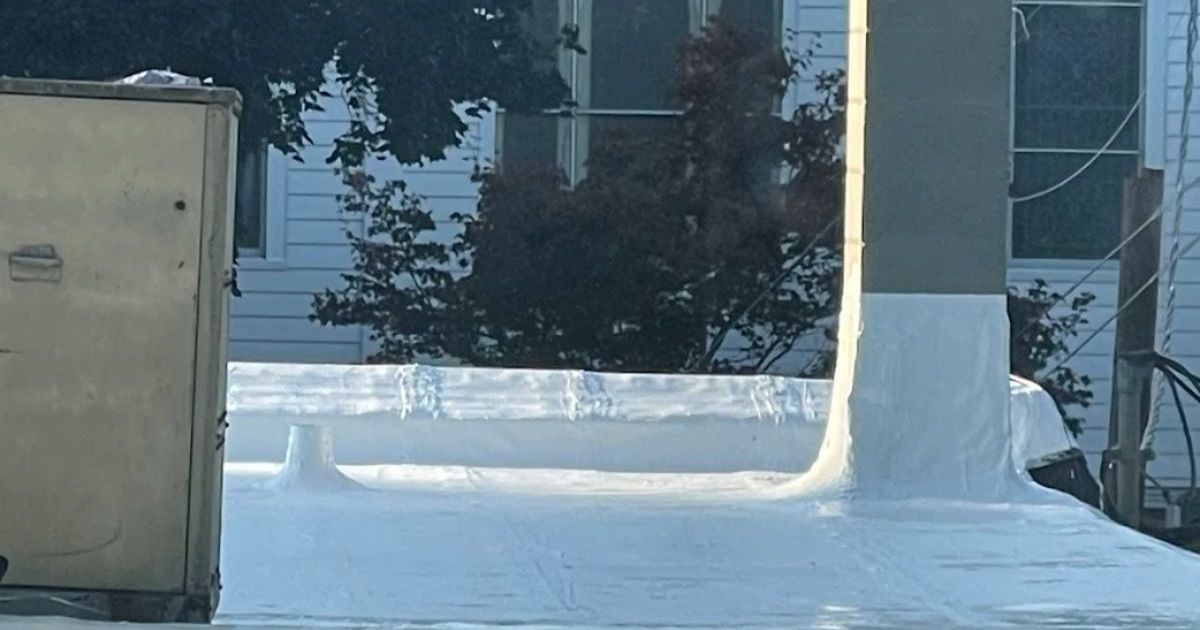
Every commercial roof leak repair story starts the same way. You fix it, it comes back. You fix it again, it comes back again. And at some point, the patches stop feeling like solutions and start feeling like delays.
That was the exact situation for the owner of a commercial real estate office building. The roof was a 1,500-square-foot modified bitumen system. Not huge, but it had been repaired more than once over the years, and the leaks kept returning. At some point, the question stopped being “which patch do we put on this time” and started being “what is this actually going to cost us to fix for good.” That’s the moment most building owners start researching contractors, and that’s exactly where Silicoat Roofing stepped in.
A traditional tear-off and full replacement on a roof this size would have run approximately $30,000. Silicoat Roofing completed the entire project, including more extensive repairs than a typical restoration requires, for $11,873. That’s a savings of over $18,000 on a roof that was back in service within three days without a single disruption to the people working inside the building. This commercial roof repair case study walks through exactly how that outcome was reached, from the first inspection to the final coat
If you’re managing a commercial building with a persistent leak and want an honest assessment of your options, contact us for a free inspection before you commit to anything.
Project Snapshot
| Project Detail | This Project |
|---|---|
| Building Type | Commercial real estate office |
| Roof Size | 1,500 sq ft |
| Existing Roof System | Modified bitumen with a history of multiple repairs |
| Primary Problem | Persistent roof leak that prior repairs had not resolved |
| Solution Applied | GACO S4200 High Solids Silicone with HER Polyurethane at all seams, penetrations, and protrusions |
| Project Duration | 3 days |
| Business Disruption | None — tenants continued working throughout |
| Estimated Cost of Full Tear-Off | ~$30,000 |
| Cost of Silicoat Restoration | $11,873 |
| Total Savings | $18,127 (approx. 60% less than tear-off) |
Every number in that table is real, and every decision that led to those numbers started with one thing: a thorough commercial roof inspection.
Curious about what a restoration would cost compared to a full replacement? Contact us to schedule your commercial roof inspection.
The Commercial Roof Inspection: How the Problem Was Diagnosed
When a commercial roof leak repair problem keeps coming back despite multiple attempts, the diagnosis is usually the issue, not the roof itself. Modified bitumen systems are durable, but they’re complex. When leaks develop after years of use and multiple repair attempts, the water entry point is often nowhere near the visible damage or the last patch applied. Moisture travels along the path of least resistance, which means what looks like a simple seam failure on the surface might actually be a drainage issue, a failing penetration seal, or a combination of problems that a surface patch won’t reach.
This is why so many building owners end up in the same frustrating cycle. Each repair addresses what’s visible, while the underlying vulnerabilities keep doing their damage out of sight. A persistent roof leak solution requires looking at the full picture, not just the wet spot on the ceiling.
What the Inspection Actually Involved
When Silicoat visited the site, the inspection wasn’t a quick walkabout. It was a systematic evaluation of the entire membrane, every seam, every penetration, every protrusion, and all drainage points. That process is what separates a real commercial roof inspection from a bid walk, and it’s the only way to understand what a roof actually needs before recommending a course of action.
The assessment confirmed what the history of repeated repairs had already suggested: this roof had multiple vulnerabilities, not just one. The modified bitumen membrane had reached a stage where isolated repairs would continue to fail because the system as a whole needed to be stabilized and protected. The good news was that the deck and underlying structure were sound. The roof didn’t need to come off; it only needed a comprehensive restoration.
Why That Distinction Matters So Much
The difference between a roof that has structurally failed and one that has surface and seam integrity issues is the difference between a $30,000 project and an $11,873 one. It’s a distinction that only an experienced flat roof repair contractor can reliably make on-site.
The inspection also shaped the scope of work. Because this roof had more issues than a standard restoration, the repair phase before coating would be more involved than typical. That’s reflected in the final cost, but even with that additional work built in, the restoration came in at less than 40% of what a full replacement would have cost.
The Persistent Roof Leak Solution: Coating System, Materials, and Method
Not every roof coating system is the same, and not every damaged roof is a good candidate for restoration. What made this project a strong candidate was the condition of the underlying deck and the localized nature of the membrane failures. Once the inspection confirmed that the roof structure was intact, the question became which system would deliver the most durable, long-lasting result on a modified bitumen substrate with this level of wear.
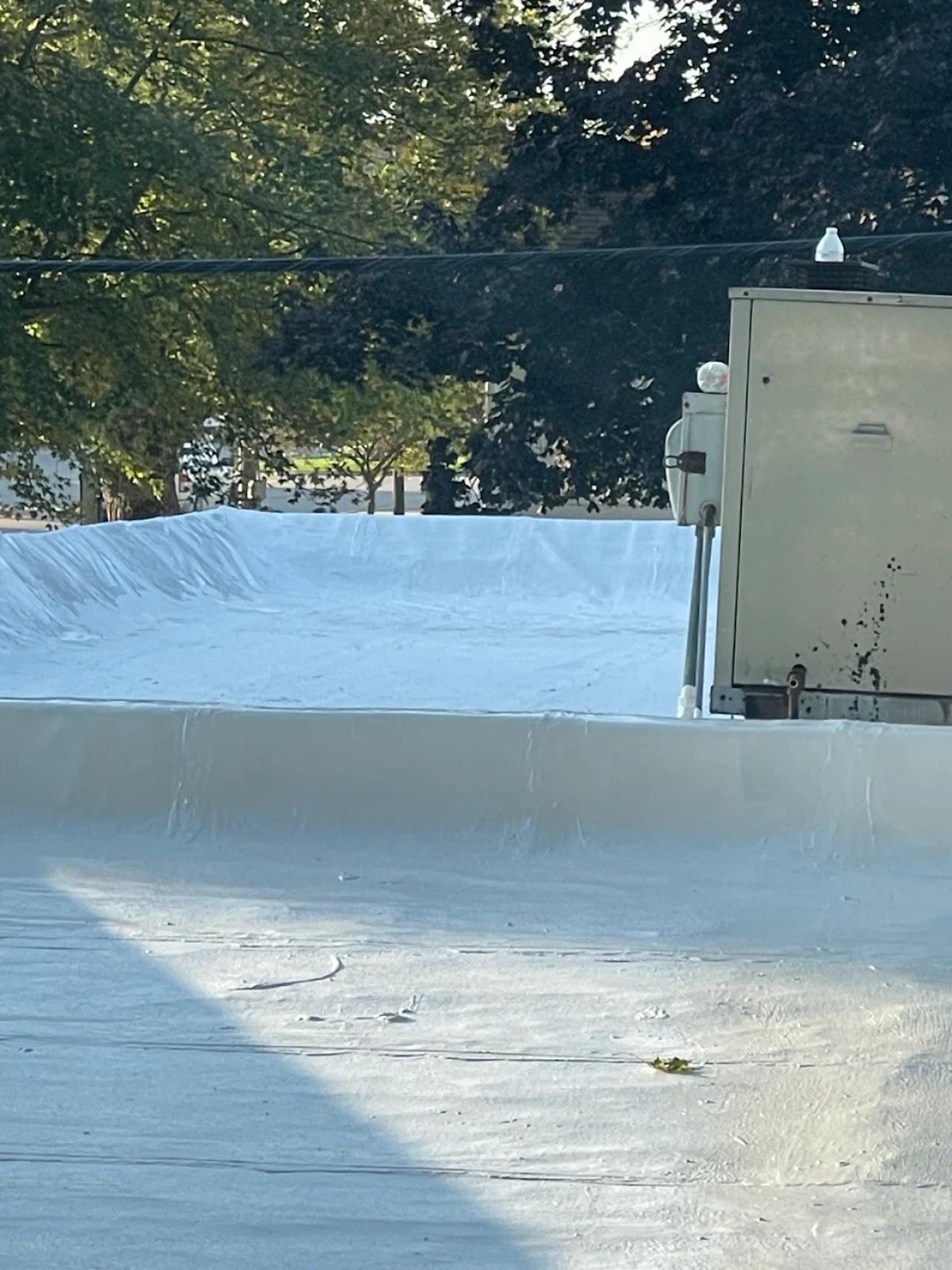
Silicoat selected the GACO S4200 High Solids Silicone, a commercial-grade coating chosen for its resistance to standing water, UV resistance, and temperature extremes. Silicone coatings are particularly well-suited to flat roofs because they don’t absorb water, they maintain their flexibility across a wide temperature range, and they bond tightly to a properly prepared surface. For a roof in this condition, it was the right material for the job.
The Repair Phase
Before any coating goes down, the substrate has to be properly prepared. On this project, that meant sealing every seam, penetration, and protrusion with HER Polyurethane, a high-performance sealant designed to handle movement and expansion at the transition points where leaks most commonly originate. Those are the areas around HVAC equipment, pipe boots, parapet walls, and anywhere the membrane meets another surface at a different angle or material.
This is the step where this project diverged from a standard roof restoration. Most jobs that come to Silicoat need some seam work, but this one needed considerably more. That’s not unusual for a modified bitumen system with a long history of patch repairs. Over time, patch-on-patch work creates its own complications, and a thorough restoration has to work through all of those layers before the coating goes on.
The additional repair scope is part of why the cost was $11,873 rather than a lower figure. A standard restoration on a 1,500 sq ft roof in cleaner condition would typically come in less. But even with the extended scope, the cost to redo this commercial roof was still 60% below the tear-off alternative, and the result was a fully sealed, coated, and warranted system.
Application and Project Timeline
Once the sealant work was complete and every seam and penetration was addressed, the GACO S4200 coating was applied across the full membrane surface. The project ran three days from start to finish, and at no point did anyone inside the building need to stop working.
That continuity of operations is something commercial clients consistently underestimate when comparing restoration against tear-off vs roof coating options. A roof replacement on a commercial building doesn’t just cost more on paper. It frequently means disrupted tenants, equipment that has to be moved or protected, and the administrative overhead of managing a much longer and more invasive project. Restoration eliminates most of that, and in a working office environment, that has real value beyond the invoice.
Roof Restoration vs Replacement: What the Numbers Actually Show
Tear-off replacement isn’t always the wrong answer, and it’s important to say that clearly. If the roof deck is compromised, if the insulation is saturated and has been holding moisture for an extended period, or if the system has simply reached the end of its functional life, replacement may be the only responsible path forward. Any contractor who tells you otherwise when the structure itself has failed is not being straight with you.
But when the deck is sound, and failures are at the surface and seam level, commercial roof leak repair through restoration is frequently the more cost-effective and less disruptive path
Tear-Off vs Restoration: Cost Comparison
| Cost Factor | This Project |
|---|---|
| Traditional tear-off and replacement (estimated) | ~$30,000 |
| Silicoat restoration with extended repair scope | $11,873 |
| Direct savings | $18,127 |
| Percentage saved vs tear-off | ~60% |
| Business disruption during project | Zero |
| Project duration | 3 days |
60% savings on a commercial roofing project, without shutting down operations for a single day, is not a marginal difference. For a facility manager working within a capital budget, that gap is the difference between one large roofing line item consuming the year’s maintenance budget and several other deferred projects finally getting addressed.
Professionalism, Follow-Through, and the Way the Job Was Managed
Here’s the client’s experience, in their own words:
“Very easy company to work with! Rick and Alex are great. Alex came into my office and asked if he could help with any roof issues we’ve had. We’ve actually had a persistent leak that we haven’t been able to get under control. Their product was significantly lower cost to redo our roof than a traditional tear off and redo. We hired them and we’re very delighted by the professionalism, prompt response, cleanup, and follow up on all the details of our project. I would highly recommend them.” – Tim Creech (Google Review, 5 stars)
There are a few things worth unpacking in that review because they speak to how we approach every job, not just this one.
How the Relationship Started
The review notes that Alex walked into the office and asked if there were any roof issues he could help with. It’s a small detail, but it says something about the company’s approach to new clients. There was no manufactured urgency, no catastrophizing about damage that needed immediate attention, no attempt to create a problem where one hadn’t already been identified. Just a professional making himself available and letting the client drive the conversation.
For many building owners and facility managers, that alone is a relief. Commercial roofing is a space where the oversell is common, and where contractors sometimes default to the most expensive recommendation regardless of what the building actually needs. A conversation that starts with a genuine question instead of a prepared pitch sets a fundamentally different tone, and it’s the kind of first impression that tends to hold up throughout the project.
During the Project
The client was able to continue working throughout all three days of the project. That’s a direct result of how the crew managed the site: the work was organized, the cleanup happened daily rather than at the end, and the building’s normal operations ran without interruption from start to finish.
At Silicoat Roofing, the standard is to leave every job site a little cleaner than it was found because we know that for a working office environment, it matters in ways that don’t always show up in a contract.
After the Project
Post-project follow-up is where a significant number of contractors fall short. Once the final invoice is paid, the communication tends to stop. Tim specifically mentioned follow-up in his review, which means Silicoat checked back in after the project was complete to confirm the roof was performing as expected and to make sure there were no outstanding questions or concerns.
For a client who had been managing a persistent leak through multiple failed repair attempts, that follow-up carries real weight. It’s the practical confirmation that the contractor stands behind the work, not just through a warranty document but through actual continued contact.
“Every client who comes to us with a persistent leak has already tried something that didn’t work. Our job is to find out why, fix it properly, and make sure they’re not back in the same situation a year from now. Restoration isn’t the cheap shortcut. Done right, it’s the smarter long-term decision.” – Rick Dodaj, Founder of Silicoat Roofing.
That’s why our commercial clients trust Silicoat Roofing: 20-year warranty available on qualifying restoration systems, proven track record across commercial properties of varying size and complexity, transparent pricing without hidden scope expansion, consistent post-project follow-up, and a job site that’s left cleaner than it was found, every time.
Frequently Asked Questions
A properly applied silicone coating system is a long-term roofing solution, not a patch. It seals the full membrane surface, all seams, and all penetrations in one continuous application. Silicoat offers a 20-year warranty on qualifying restoration projects, which says something about how the company stands behind the work long after the crew leaves the job site.
The two factors that matter most are deck integrity and the nature of the membrane failures. If the underlying structure is sound and the failures are concentrated at seams, penetrations, or protrusions rather than spread across the membrane broadly, restoration is typically viable. The only reliable way to know for certain is through a professional commercial roof inspection from a contractor experienced in commercial roof leak repair who will give you a straight answer regardless of which option it points toward.
Yes, and any contractor who tells you otherwise isn’t being fully straight with you. No roofing system is maintenance-free. Silicone coatings should be inspected annually, with drainage kept clear and any new penetrations or equipment installations resealed promptly. Proactive roof maintenance typically means a re-coat rather than a full replacement, which keeps long-term costs predictable and well below what a new roof would run.
Ready to Find Out What Your Roof Actually Needs?
The building in this case study had been living with a roof problem that multiple previous repairs hadn’t solved. The owner wasn’t looking for a shortcut anymore; they were looking for a contractor who would figure out what was actually wrong, fix it properly, and give them a straight answer on cost without defaulting to the most expensive option.
That’s the Silicoat Roofing approach on every job. The inspection is free, the assessment is honest, and the recommendation reflects what your building needs rather than what generates the largest invoice.
Contact Silicoat Roofing today to schedule your commercial roof inspection and find out whether restoration can solve your problem, and what it would cost compared to a full replacement. Most clients are surprised by the answer.
About the Author
Rick Dodaj is the founder and CEO of Silicoat Roofing, specializing in commercial roofing solutions that protect businesses and their investments. With extensive experience in commercial roofing, Rick leads a team dedicated to providing cost-effective, long-lasting roofing solutions.
 Previous Post
 Next Post