

Commercial roof problems rarely begin with drama.
Most of the time, they start quietly. A seam that lifts just a hair. A drain that slows down but still “works.” A penetration that looks sealed from ten feet away… until wind, vibration, and UV wear it down one season at a time.
And that’s the frustrating part for building owners and facility managers: you can be doing all the right things and still get blindsided.
Some commercial roof problems are the kind that slip past quick rooftop checks, routine vendor walk-throughs, and even experienced maintenance teams. Not because anyone is careless, but because a commercial roof is a system – and systems fail in ways that aren’t always obvious at first glance.
The good news is that you can catch most issues early if you know what to look for and how to document it.
Let’s break down the commercial roofing issues that get missed most often, why they hide so well, and how you can spot them before they become a full-blown emergency commercial roof repair.
Why Commercial Roof Problems Get Missed So Often
If you’ve ever had a roof issue “come out of nowhere,” you’re not alone.
From the outside, it’s easy to assume that a roof either leaks or it doesn’t. That it’s either “good” or “bad.” But commercial roofing doesn’t work that way.
A commercial roof can be compromised long before a single drip reaches the interior. In fact, some roofs can be holding water and trapping moisture while still looking fine from inside the building.
That’s the gap where expensive surprises form.
The “working roof” illusion
Many facility teams naturally operate on a simple system: if there’s no leak inside, the roof is okay.
Unfortunately, that mindset is exactly how hidden commercial roof damage builds up unnoticed.
A roof can have:
- membrane seam weakness
- insulation moisture that never reaches the ceiling
- ponding water that creates slow deterioration
- deteriorating flashings at curbs and penetrations
…and still “function” in the short term.
This is why the first visible signs of trouble often show up at the worst time: during a storm, right before an event, in the middle of peak business hours, or when tenants are already frustrated about something else.
Flat roof inspection issues create blind spots
Most commercial roof systems are low-slope or flat, and they’re designed to manage water differently than residential roofs.
The challenge is that flat roof inspection issues tend to happen because so much of the roof is visually repetitive. It’s open surface area. It looks the same in every direction. That makes it surprisingly easy to miss subtle changes unless you know exactly what should (and shouldn’t) be there.
Some common inspection blind spots include:
- seams that appear intact but have started separating at the edge
- “soft” areas that indicate wet insulation underneath
- ponding zones that form after minor settling
- sealant cracking at penetrations that only shows up close
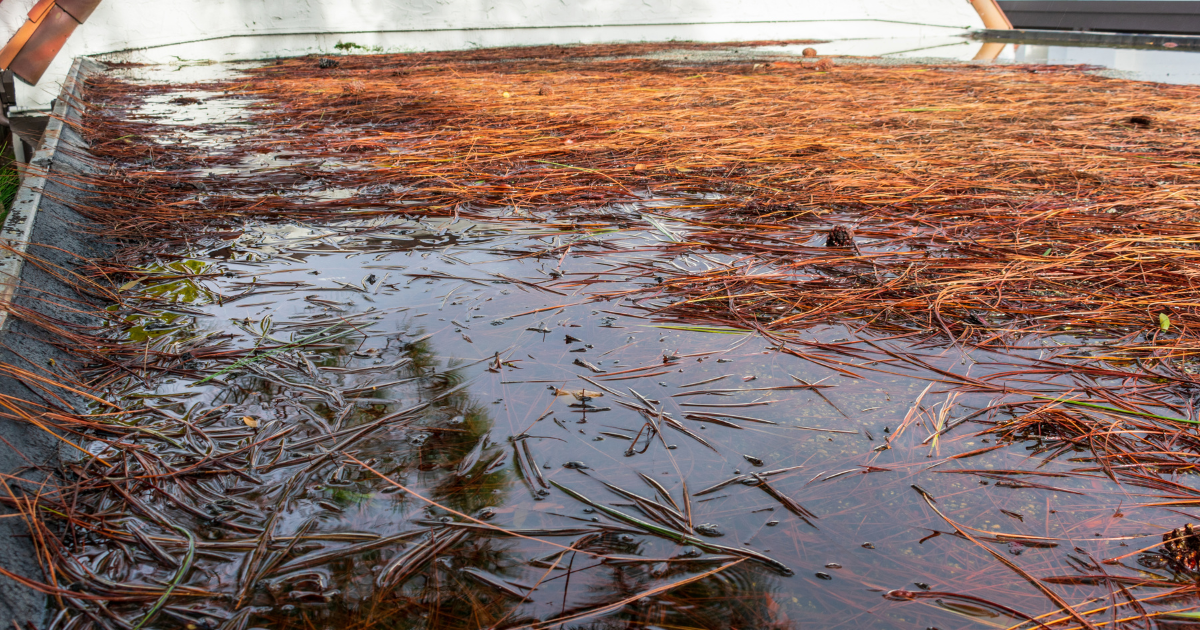
- debris buildup that blocks drainage even though the roof surface looks clean
And to be fair, many walk-through inspections focus on the obvious: punctures, standing water, missing caps, broken equipment. Those checks matter, but they don’t always reveal the early-stage problems that shorten roof lifespan.
This is where proactive commercial roof maintenance come into play: a small seam issue becomes a wet insulation issue. Wet insulation becomes thermal loss, deck stress, mold risk, or unexpected interior damage. And suddenly, you’re not just scheduling a repair -you’re dealing with downtime and a budget surprise.
Now that we’ve covered why these problems get missed, let’s talk about the specific types of hidden damage that show up most often.
Hidden Commercial Roof Damage That Looks Harmless at First
Some commercial roof damage looks serious right away. But the problems missed most often are the ones that appear minor – these are the sneaky commercial roofing issues that don’t trigger alarms early. They quietly chip away at roof performance until something finally gives.
Insulation moisture problems that don’t drip
Wet insulation is one of the most expensive issues on flat roofs because it can exist without showing obvious interior leaking.
A roof system can hold moisture in:
- insulation boards
- cover boards
- layers of old roofing beneath a newer system
- decking channels
What does that actually mean?
Your roof might be waterlogged in one section, losing energy efficiency, and creating long-term deterioration… even if you don’t see stains inside the building yet.
Some early signs of insulation moisture issues include:
- a roof surface that feels “spongy” underfoot
- recurring bubbles or blisters in certain zones
- temperature inconsistencies inside the building (especially top-floor spaces)
- persistent humidity complaints from tenants
- localized ponding water that seems worse than it should be
For many facility managers, the first clue is comfort issues: HVAC strain, rising energy costs, random odors that “go away” and then come back. Unfortunately, by the time water is dripping, moisture may have already spread beyond the visible problem area.
Membrane seam failures that start as tiny separations
Seams are natural weak points because they’re transitions – they’re where materials meet, where movement shows up first.
Even a small seam separation can allow water intrusion, especially when:
- water ponds near the seam
- the seam is in a high-traffic path
- the roof surface experiences frequent expansion/contraction
- adhesion has weakened due to age or UV exposure
A seam issue might look like “nothing” from a distance. But up close, you may notice:
- slight lifting at the edge
- wrinkling around the seam line
- dirt and debris collecting in the seam area
- discoloration or surface wear where water sits longest
This is a classic example of an issue that can be easy to miss in quick rooftop checks. Unless someone is physically getting close to seam lines and transitions, the early-stage problem can blend into the roof surface.
Rooftop penetration leaks that hide behind equipment
Commercial roofs are also mechanical platforms.
HVAC units, vents, conduits, rooftop fans, satellite equipment – it all has to go somewhere. And every time something penetrates the roof, it creates a vulnerability point.
That’s why rooftop penetration leaks are so common, especially on older buildings or facilities that have been modified several times over the years.
The roof is constantly moving:
- vibration from equipment
- expansion from heat
- contraction from cold
- minor shifting of rooftop units over time
Even a well-installed penetration can become a leak source if it wasn’t designed to flex and hold long-term under those conditions.
Some early warning signs include:
- cracking or separation around boots
- hardened sealant that no longer has elasticity
- small gaps at metal edges
- staining around curbs
- recurring small leak complaints after storms
And one of the most frustrating realities: penetration leaks don’t always show up directly under the penetration. Water can travel along decking, insulation, or structure before it finally appears inside.
If hidden damage is one half of the equation, water movement is the other. Even a “small” vulnerability becomes a big problem when drainage isn’t doing its job.
Drainage Problems That Create Repeat Roof Failures
If there’s one area that deserves more attention than it typically gets, it’s drainage.
A lot of property teams think about it only when they see standing water, but these issues can exist even when the roof “seems to drain eventually.”
And that’s the trap.
Because drainage problems commercial roofs face don’t always show up every day: they show up when the weather hits hard, when debris collects faster than usual, or when the system is already under stress.
Drainage issues often start after “normal” rooftop changes
Commercial roofs don’t stay untouched. Buildings evolve: maybe you added new HVAC equipment, maybe a vendor installed a new penetration, maybe a section was patched, or maybe the building settled slightly over the years.
Those changes can subtly alter:
- slope
- water flow paths
- load distribution
- runoff patterns
So even if the roof drained well five years ago, it may not drain the same way today – this is why “it’s always been like that” isn’t always a safe assumption with flat roofs.
Why ponding water is more than an inconvenience
Ponding water isn’t automatically a disaster, but it’s never a neutral factor. Standing water can:
- accelerate membrane wear
- increase seam stress
- weaken adhesives over time
- amplify freeze/thaw roof damage in cold seasons
- add weight load that stresses certain areas repeatedly
And even if the roof membrane is rated for water exposure, prolonged ponding can expose weak points faster than dry conditions ever would.
That’s why drainage should be treated like a performance issue, not just a cleanliness issue.
FAQ About Commercial Roof Problems
What are the most common commercial roof problems?
The most common commercial roof problems include membrane seam separation, flashing failures, rooftop penetration leaks, clogged drains, and ponding water. These issues often start small and get missed during routine checks, which is why preventive inspections and early repairs are so important for protecting the roof system.
What are early signs of commercial roof failure?
Early signs of commercial roof failure include recurring ponding water, raised seams, membrane bubbling, cracked sealant around penetrations, interior staining, humidity changes, and musty odors. Even small repeat issues can be a warning sign that the roof system is starting to break down.
How do preventive roof inspections help reduce repair costs?
Preventive roof inspections help catch problems while they’re still isolated. That means repairs stay smaller, moisture is less likely to spread into insulation, and you avoid emergency work that often costs more. Inspections also create a clear plan for repairs and budgeting.
Can insulation moisture problems exist without an active leak?
Yes. Insulation moisture problems can exist without visible interior leaks. Moisture can enter through seams, penetrations, or flashing transitions and remain trapped in the roof system. Over time, wet insulation can lead to energy loss, membrane stress, and unexpected roof failure.
What causes drainage problems on commercial roofs?
Drainage problems commercial roofs face often come from clogged drains, debris buildup, minor settling, rooftop modifications, or changes in water flow caused by added equipment. Even small drainage issues can lead to ponding water, which increases stress on seams and penetrations.
Are rooftop penetration leaks common on flat roofs?
Yes. Rooftop penetration leaks are one of the most common flat roof issues because penetrations move over time due to vibration, temperature changes, and aging sealant. Even penetrations that look sealed can allow water intrusion under the right conditions.
Catch Commercial Roof Problems Before They Spread
Commercial roof problems don’t usually appear all at once.
They build quietly through seam stress, drainage struggles, rooftop penetrations, and moisture that stays hidden until it becomes expensive.
But here’s the truth: most of these issues can be spotted early. And when they’re caught right away, they’re easier to fix, easier to budget for, and far less disruptive to your building and your tenants.
If your roof hasn’t been inspected recently, or if you’re seeing signs like recurring ponding, repeat leaks, seam changes, or unexplained interior moisture, it’s worth taking action now, before the next storm forces your hand.
Silicoat Roofing can help you identify risks early and recommend the right path forward. Contact us whether you need targeted repairs, a maintenance plan, or a long-term coating solution, the best time to act is before “small” becomes “urgent.”
About the Author
Rick Dodaj is the founder and CEO of Silicoat Roofing, specializing in commercial roofing solutions that protect businesses and their investments. With extensive experience in commercial roofing, Rick leads a team dedicated to providing cost-effective, long-lasting roofing solutions. Connect with him on LinkedIn to learn more about commercial roof maintenance and protection strategies.
 Previous Post
 Next Post