
Commercial Roof Inspection Services
Know exactly what your roof needs before it costs you more.
Most commercial roofs do not fail without warning. Seam separation, flashing fatigue, and moisture trapped beneath the membrane build slowly over months or years before water shows up inside your building. By that point, a condition that could have been caught on a routine walkover has become a capital repair.
Silicoat Roofing’s commercial roof inspection services give you a written, zone-by-zone assessment of your roof’s actual condition, with photographs, specific findings, and a direct recommendation on what it needs next.
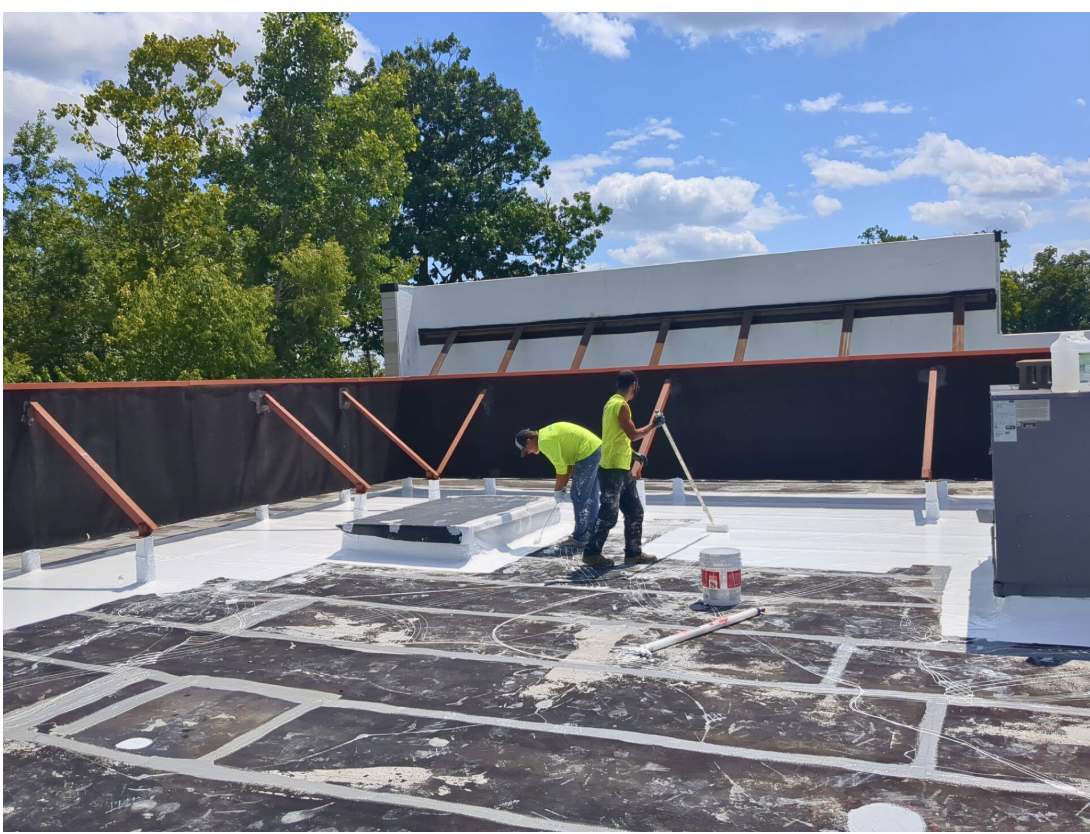
Commercial roofing confidence built on experience, protection, and transparency.
Trusted by property owners who need dependable commercial roofing solutions, clear reporting, and long-term protection.
Over 20 years of expertise
Commercial roofing specialists
20-Year Leak-Free Guarantee
Backed by every qualified restoration
Written report every visit
Photos, zone ratings, and clear next steps
Free roof analysis
No obligation
Why Regular Inspections Matter for Commercial Buildings
A commercial roof works against UV exposure, thermal cycling, wind, and weather every day. The damage that accumulates at seams, flashings, and penetrations is rarely visible from the ground, and often not visible from the roof surface itself. Trapped moisture in particular can sit undetected beneath a membrane that still looks intact on top.
What a facility manager cannot see, a professional inspection documents. Silicoat Roofing’s team has performed commercial roof inspections across a wide range of flat and low-slope systems with over 20 years of expertise, and the findings that matter most consistently appear in the same places: seams, drain collars, flashing terminations, and penetration edges.
Regular inspections do three things that a reactive approach does not. They catch conditions before they cause interior damage. They produce documentation that keeps manufacturer warranties valid. And they create a condition history that makes capital planning possible, because a facility manager with three years of inspection records knows where the roof is headed, not just where it stands today.
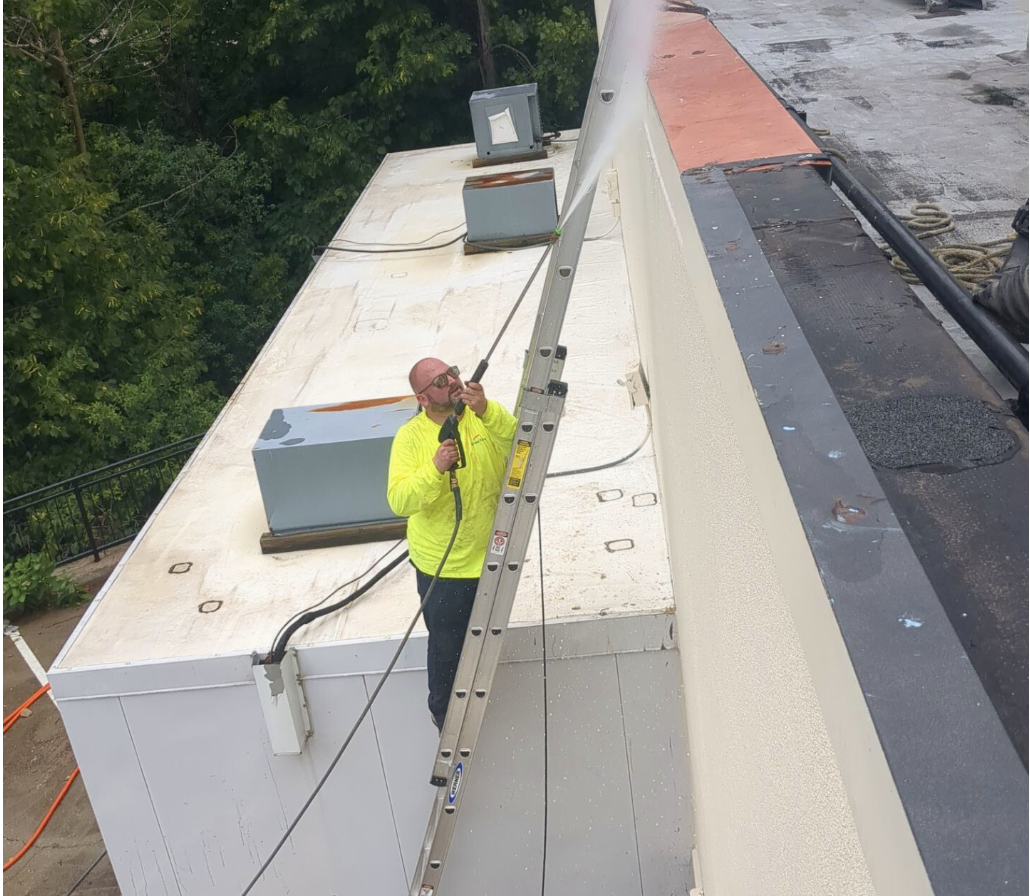
What Our Commercial Roof Inspection Covers
Every Silicoat inspection covers six functional areas. A report that skips any of them is not a complete condition assessment.
Membrane surface and field condition:
Full walkover for blistering, cracking, surface erosion, punctures, and UV-related deterioration. Covers TPO, EPDM, PVC, built-up roofing, and silicone-coated systems.
Seams and lap joints:
Every linear foot checked by hand for lifting, fishmouths, open laps, and brittle edges. Seam failure is the most common origin point for flat-roof water infiltration.
Flashings and terminations:
Parapet walls, step flashings, HVAC curbs, termination bars, and all sealant joints. Flashings absorb more thermal movement than field membrane and fail earlier on every system.
Drainage system:
All interior drains, scuppers, overflow drains, and ponding patterns. Blocked or settled drainage is a primary driver of flat roof membrane degradation over time.
Penetrations and equipment curbs:
Pipe boots, pitch pockets, HVAC curb flashings, conduit, and walkway pad edges. Every penetration is a potential water entry point that requires sealant maintained in serviceable condition.
Thermal scanning:
Infrared scanning to detect moisture trapped beneath the membrane that does not show up on a visual walkover. Wet insulation holds heat differently than dry insulation, and thermal imaging maps those differences across the full roof surface.
Written condition report:
Zone-by-zone findings with photographs tied to a roof diagram, a condition rating per zone, and a direct recommendation: monitor, repair, restore, or replace. You receive this in writing after every visit.
How It Works
From the first inspection to your final recommendation, every step is documented, clear, and built around your property’s needs.-
01Step 1
Schedule your free roof analysis
Call (248) 270-7672 or fill out the contact form. We confirm a time that works for your building access and schedule. Schedule your analysis -
02Step 2
On-site inspection
Our team walks every zone, documents findings with photographs and location references, and assesses substrate condition where accessible. -
03Step 3
Written condition report
You receive a complete zone-by-zone report with photographs, condition ratings for each zone, and a direct recommendation on what your roof needs. -
04Step 4
A clear next step
Repair, restoration, or continued monitoring. You leave with a specific answer backed by clear documentation.
When to Schedule a Commercial Roof Inspection
At minimum, once a year. Twice a year is better practice for most commercial buildings. The spring visit catches what winter stress opened. The fall visit prepares the roof before freeze-thaw cycling sets in. Beyond the annual schedule, inspections are warranted in any of these situations:
After any significant weather event, including hail, high winds, or heavy ice accumulation.
Before a property purchase, sale, or lease renewal.
Before a roof coating application or restoration project.
Before a manufacturer warranty expires.
When interior staining, ceiling tile damage, or HVAC performance changes are noticed.
Before and after any rooftop construction or equipment installation.
Manufacturer warranties often require documented regular inspections to remain valid. Skipping them can void coverage at exactly the moment a claim would matter most.
What Happens If the Inspection Finds a Restoration Candidate
Not every roof that needs work needs replacement. Commercial roofs that are structurally sound, with bonded insulation across the substantial majority of the surface, are frequently strong candidates for liquid silicone membrane restoration.
Silicoat’s restoration approach creates a new seamless waterproof surface over the existing roof system. The company cites savings of up to half the cost of traditional replacement, and every qualified restoration is backed by the 20-Year Leak-Free Guarantee.
If your inspection finds that restoration is the right path, Silicoat’s team will walk you through exactly what that scope involves. If it does not, you will hear that clearly, along with what the right next step actually is.
Frequently Asked Questions?
A professional inspection covers the full membrane surface, all seams and lap joints, flashings and termination edges, the drainage system, and every penetration and equipment curb. You receive a written report with photographs, zone-by-zone condition ratings, and a direct recommendation. Not a verbal summary.
At least once a year. Twice a year, one visit in spring and one in fall, is the better standard for most commercial buildings. Add an inspection after any major weather event, before a warranty expires, or before any planned rooftop work.
Yes. Silicoat Roofing offers a no-obligation free roof analysis for commercial properties. There is no cost to find out what your roof actually needs.
Yes. Trapped moisture beneath the membrane does not always show up on a surface walkover. A thorough inspection looks for subsurface indicators at drain collars, seam laps, and penetration edges that a quick visual check from the roof edge will miss.
An inspection documents visible and accessible conditions across all roof zones and produces a written report. A restoration assessment goes further, evaluating whether the substrate qualifies for a liquid silicone membrane restoration and what that scope would look like. Silicoat can perform both in a single visit.
Not necessarily. Roof access needs to be arranged in advance. The written report is delivered digitally so you can review findings on your own schedule.
Find Out What Your Roof Actually Needs
Silicoat Roofing has evaluated hundreds of commercial roofs over more than 20 years. A free roof analysis gives you a written, specific answer on your building’s condition and what it needs next.
Contact us
Schedule Your Free Roof Analysis
Schedule Your Free Roof Analysis
Get in touch with us today by filling out this form. One of our skilled professionals will reach out to you shortly to discuss your commercial roofing needs and schedule your free roof analysis. We look forward to hearing from you!